
Enterprise data solutions for hybrid cloud, analytics, and AI
Unify fragmented data across hybrid cloud, on-premise, and edge without the rip-and-replace.
Managing data at scale is no longer just a storage challenge: it is a fragmentation crisis. Most enterprises operate across a complex web of legacy systems, multiple cloud platforms, and edge environments. This complexity creates silos that prevent a unified view of the truth.
AI and real-time analytics offer clear benefits, but the technical debt and poor data quality often block progress. To bridge this gap, organisations need data solutions that treat infrastructure as a cohesive ecosystem rather than a collection of disconnected parts. Talk to an expert to see how a unified, governed data foundation can support your AI and analytics roadmap.
Data solutions that unify, modernise, and protect enterprise data
Modern enterprises face a difficult balancing act. They must consolidate fragmented data across disparate systems into a unified architecture without disrupting ongoing operations. Traditional 'rip and replace' strategies are rarely feasible for large-scale organisations. Instead, the focus has shifted toward building a Google Cloud foundation, anchored on services such as BigQuery and Dataflow, that can co-exist with existing infrastructure.
Effective data solutions prioritise the modernisation of data flows. They ensure that security and protection are embedded at the architectural level rather than added as an afterthought. This approach allows for a gradual transition to the cloud while maintaining the integrity of mission-critical systems.
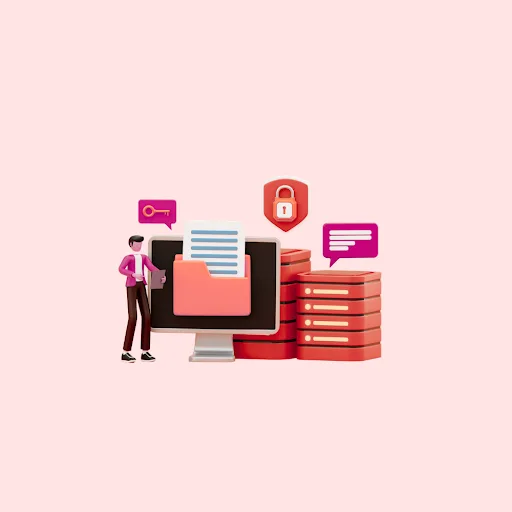
What enterprise data solutions deliver
A well-designed data foundation produces concrete outcomes across the organisation:
A single view of the truth across systems: fragmented data from CRM, ERP, transactional databases, and third-party sources is consolidated into one governed architecture, so leadership decisions are based on complete signals rather than partial data.
A path from reactive reporting to proactive decision-making: integrated data flows make real-time analytics and predictive modelling possible, shifting the business from dashboards that describe the past to models that anticipate what is next.
Governed, auditable access at scale: consistent identity management and transparent data lineage across mainframe, public cloud, and edge meet increasingly stringent privacy regulations without slowing teams down.
Scalability without compromise on security or cost: sensitive workloads stay in private environments while heavy analytics and AI burst to the cloud, balancing compliance, performance, and spend.

Integrate third‑party, CRM, and transaction data for insights
Real-world insights are rarely found in a single database. To gain a competitive edge, teams must prioritise data integration and engineering across CRM systems, ERP platforms, and third-party APIs. Combining these sources with transactional databases is vital for real-world insights.
When these sources remain isolated, the business relies on incomplete signals. Organisations need an architecture where transactional data meets behavioural signals from third-party sources. This setup enables real-time analytics that accurately reflect the current market state. This integration is the prerequisite for predictive modelling. It allows leadership to move from reactive reporting to proactive decision-making.
Governed access across mainframe, cloud, and edge platforms
As data moves more freely across hybrid infrastructures, the risk profile changes. Operational data governance cannot be a static set of rules. It must be a requirement that scales across mainframes, public cloud, and edge platforms.
Consistent identity management and compliance are important to ensure that data access is both secure and auditable. Privacy regulations are increasingly stringent. Modern data solutions must therefore provide a transparent lineage of how data is collected, processed, and accessed. This level of control builds trust, both within the organisation and with the end customer.
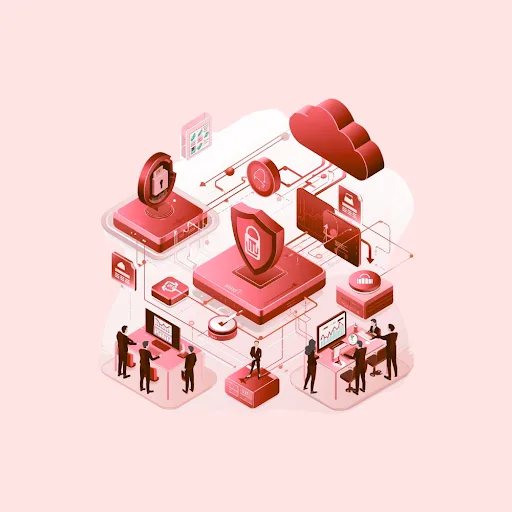
Hybrid cloud architecture for enterprise scalability
A pure public cloud approach is not always the answer for every enterprise. Many organisations adopt a hybrid cloud architecture to combine the reliability of on-premise systems with the elastic performance of the public cloud. This model allows for a strategic balance between compliance, performance, and cost.
Many enterprises choose to keep sensitive workloads in private environments while leveraging the cloud for heavy-duty analytics and AI and machine learning solutions built on services such as Vertex AI. This approach allows them to scale operations rapidly without compromising on security.
Ultimately, the most robust data solutions provide the flexibility to run workloads where they make the most sense. This strategic choice ensures both long-term scalability and operational resilience.
Why Crystalloids?
Smart AI agents need more than just great prompts, they need clean, connected, and well-governed data. That’s where Crystalloids comes in. As a trusted Google Cloud Premier Partner, we help you lay the right data foundation to build secure, scalable, and high-performing AI solutions.
Built on Strong Data Foundations
Even the smartest AI won’t perform without clean, connected, and trusted data. If your systems are fragmented, outdated, or hard to access, your agents will fall short. We help you break down silos, organise your data, and create the foundation AI needs to deliver real, measurable business impact.
19+ years of Google Cloud expertise
Crystalloids was built on one belief: data should drive better decisions. We were among the first companies to adopt BigQuery and have never looked back. With 50+ certifications and multiple Google Cloud specialisations, we’ve helped businesses move faster, smarter, and more securely.
Tailored Solutions
No two businesses are the same and neither are their agents. Whether you're testing your first conversational AI agent or scaling a company-wide initiative, we work with you to design a solution that fits your unique goals, systems, and team. From data integration to deployment, we build around you, not the other way around.