
The hidden cost of SaaS, what your licence is really buying you

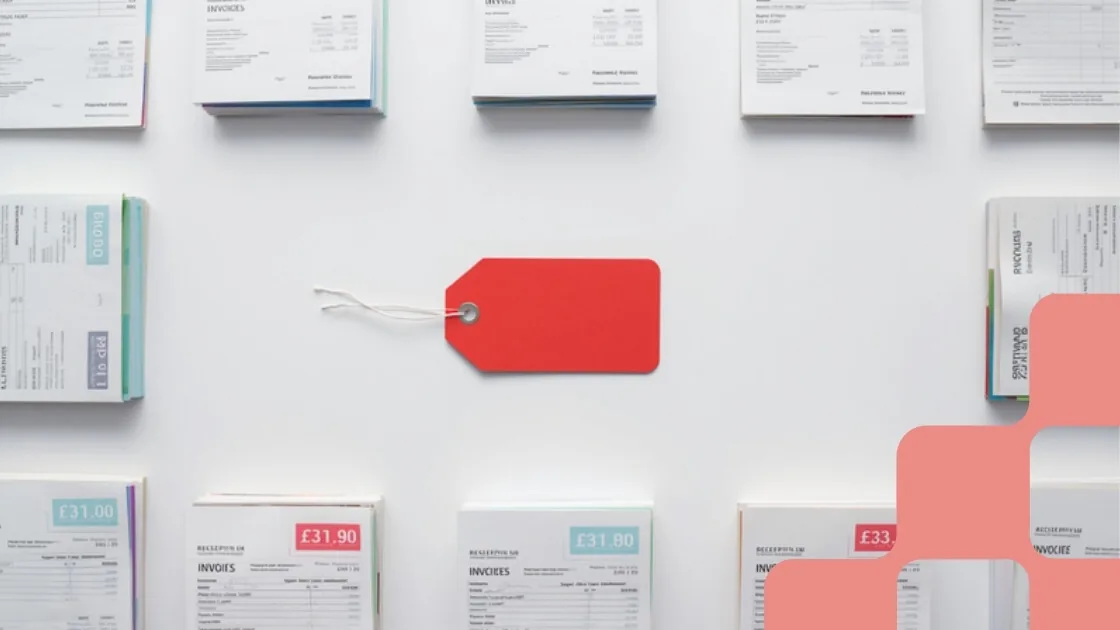
The invoice is the visible cost of a SaaS product. It is also the smallest part of the real cost. The full picture includes the engineering time spent on integrations that drift with every API update, the data that lives inside a system you cannot fully query, the roadmap decisions made by a vendor who serves a thousand other customers, and the migration cost you will pay whenever you eventually move on.
None of these costs appear on the renewal quote. They are real, they compound, and they change the economics of the build-versus-buy calculation significantly.
The integration tax
Every SaaS product in a modern data stack requires integration: connections to data sources, outputs to downstream systems, connectors to the tools sitting on either side of it in the pipeline. Those integrations require engineering time to build and ongoing attention to maintain.
API versions change. Field names shift. New data models appear in a product update. The integrations that worked last quarter need attention this quarter.
This integration tax is rarely accounted for in the original buying decision. In practice, for complex SaaS products embedded in a data stack, the engineering cost of maintaining integrations over three years can exceed the licence cost.
Vendor lock-in is a choice, not an accident
Lock-in is sometimes treated as something that happens to organisations against their will. In practice, it is the result of a series of choices: building workflows in proprietary formats, storing critical data in vendor-controlled schemas, and not investing in exit capability.
The cost of lock-in is most visible at the point of wanting to leave. Migrations scoped at three months turn into twelve-month projects because the data is in a format the vendor controls, the pipelines assume the vendor's data model, and the institutional knowledge of how the product was configured left with the people who set it up.
Organisations that manage this well maintain exit capability even while using a SaaS product: clean data exports, documented configurations, pipelines that are portable.
Roadmap dependency
When you buy a SaaS product, you buy into its roadmap. Features you need may come in a future release, or they may not. Requests go into a queue alongside those from every other customer. The product evolves in the direction of the majority, not your specific use case.
For organisations with differentiated needs, this creates a ceiling. The product will do what most customers want it to do. The specific thing your business needs may require workarounds, third-party add-ons, or simply accepting a suboptimal process.
What you are trading away
Buying a SaaS product is a trade. You get speed of deployment, someone else's R&D investment, and a product that is generally maintained. You give up control of the data model, flexibility to adapt the workflow to your specific needs, and the option to build competitive differentiation in how you handle a given process.
That trade is often worth making. It is worth understanding clearly when you make it. The organisations that struggle most with their SaaS decisions are those that did not look hard enough at what they were giving up, particularly around data ownership, exit cost, and the assumption that the vendor's roadmap would eventually solve their problem.
If you want to work through the total cost of ownership for a specific tool in your stack, book a licence assessment conversation.
Kevin Kriek
Kevin is Head of Sales at Crystalloids, where he combines deep technical expertise with commercial leadership to help organisations design and implement impactful Google Cloud solutions.
View all articles