Share this
 Kevin Kriek
on Aug 6, 2026 14:30
Kevin Kriek
on Aug 6, 2026 14:30
In an era of fragmented data, the enterprise data warehouse (EDW) remains the answer to a persistent problem: the need for a single, query-able source of business truth. An EDW is not just a storage tank. It is a governed environment where data is integrated and refined for decision-making.
By centralising information from across the organisation, it provides the reliability needed to move beyond guesswork and base strategy on historical consistent historical data, trusted metrics, and near real-time insights where the architecture supports them
What is an enterprise data warehouse?
An enterprise data warehouse is a centralised, historical repository optimised for analytical queries. It forms the core of a broader Enterprise Data Platform. This is the foundation that connects ingestion, transformation, and consumption into one governed environment.
Unlike a standard database, an EDW is designed to combine data from disparate systems, such as CRM, ERP, e-commerce, and marketing platforms, into one consistent, integrated model. This consolidation ensures that every department, from finance to operations, uses the same definitions and numbers for their reports.
EDW vs data lake vs lakehouse
Choosing between architectural patterns requires a pragmatic view of your data needs, as each serves a distinct purpose. An enterprise data warehouse is still the best choice for structured, highly governed reporting and traditional business intelligence.
In contrast, a data lake is ideal for storing raw, unstructured data intended for data science and machine learning exploration. The lakehouse has emerged as a hybrid model that attempts to blend the strict governance of a warehouse with the low-cost flexibility of a lake.
In practice, most large enterprises end up with a combined approach rather than choosing just one. They use a Cloud data lake for raw ingestion and exploration, while maintaining a data warehouse for the refined, 'golden' records required for official reporting and company-wide analytics.
Architecture of a modern cloud EDW
Modern cloud-native warehouses, with Google BigQuery as a primary reference, have moved away from the rigid designs of the past. The architecture typically begins with Ingestion, where data is brought in through tools like Fivetran, Airbyte, or Google Cloud Data Fusion.
A defining feature of this modern setup is the Separation of Storage and Compute, which allows you to scale processing power independently from storage to keep the costs efficient.
Once the data is inside, Transformation (ELT) takes place using tools like dbt (data build tool) to reshape raw data into usable models. To ensure consistency, a Semantic Layer is established to define business logic once, so that every Business Intelligence tool, interprets metrics like 'revenue' or 'churn' in exactly the same way..
Finally, the data reaches the Consumption stage, where it is served to BI dashboards, ML models, or fed back into operational systems via Reverse ETL.
Why companies move from on-premise to cloud-native EDW
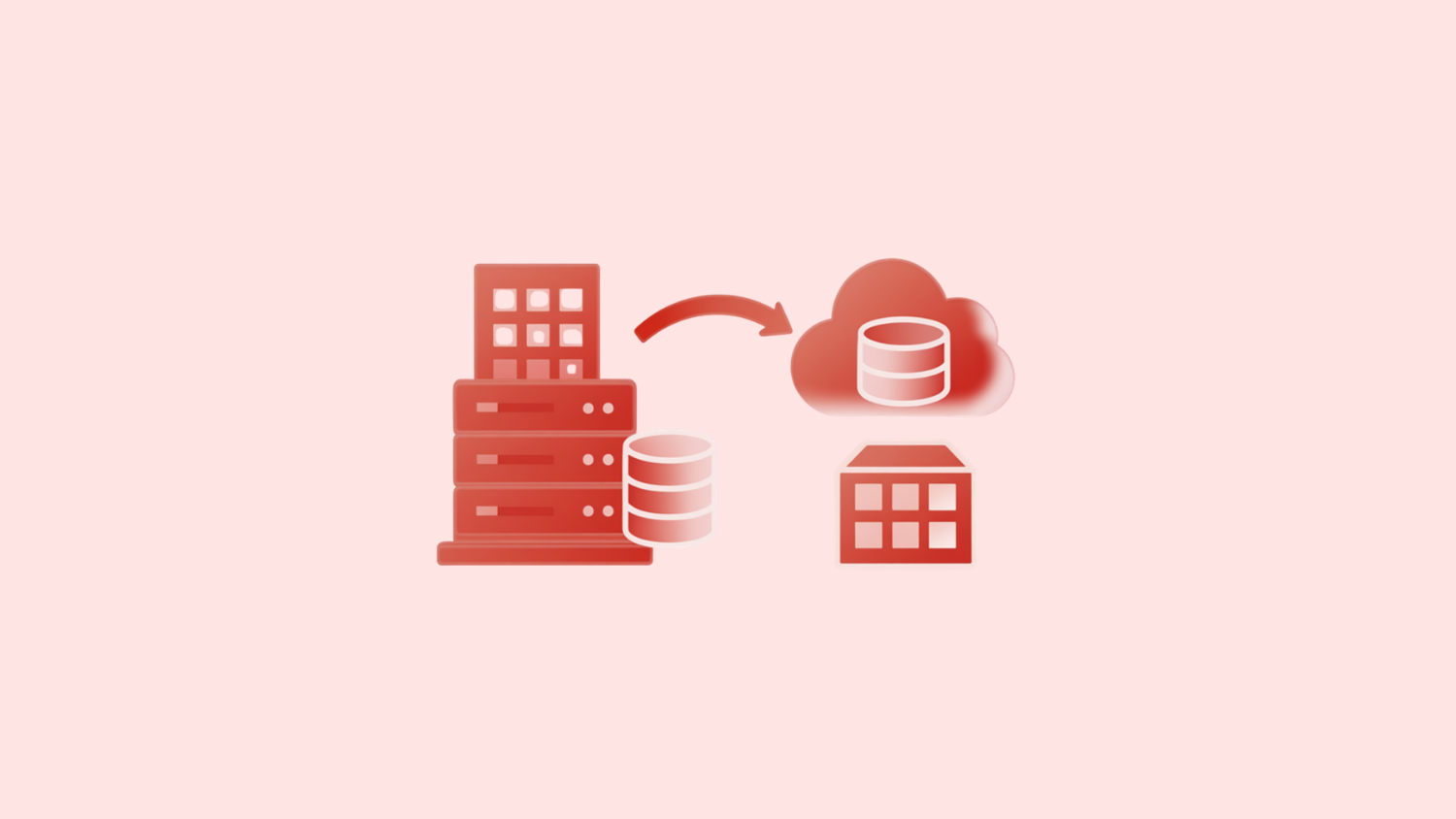
The shift from on-premise appliances to the cloud is driven by practical limitations rather than a simple desire for new technology. Legacy MPP (Massively Parallel Processing) appliances often cause significant scaling pain, as adding capacity requires expensive and manual hardware upgrades. Additionally, the maintenance overhead of managing physical servers and security patches often distracts teams from actual data engineering.
The cost structure of on-premise systems is also notoriously rigid. You pay for peak capacity even when the system is idle. A cloud-native enterprise data warehouse solves this through elasticity.
By paying only for the storage used and the queries run, you build a strong financial case for moving from Capex to Opex while significantly increasing your operational agility. However, cost control still requires governance, query optimisation, workload management, and clear ownership. Cloud does not automatically make data warehousing cheaper.
Common use cases for an EDW
A well-implemented EDW provides a foundation for several high-ROI domains. It enables Unified KPI Reporting, giving the board a single dashboard they can actually trust.
For marketing and sales, it supports a Customer 360 view by merging web behaviour, purchase history, and support tickets into one profile. The same foundation that powers a Customer Data Platform, although a CDP typically adds activation, identity resolution, consent management, and audience orchestration capabilities on top.
Beyond customer insights, the EDW simplifies Financial Consolidation by automating the reconciliation of data from different regions or entities. It also provides the granular data needed for accurate Marketing Attribution, showing exactly which channels contribute to conversion.
Finally, it serves as a reliable ML Feature Store, providing the clean, historical data required to train and deploy predictive models effectively. However, a dedicated feature store is usually a separate capability or service layer, not simply another name for the EDW.
Pitfalls in EDW projects (and how to avoid them)
Many EDW programs underperform because they are treated as one-time IT projects rather than ongoing products. A frequent trap is the absence of a semantic layer. This forces business logic into individual SQL queries and inevitably leads to conflicting numbers. Similarly, taking modelling shortcuts by skipping the design phase quickly turns your warehouse into a ‘data swamp’.
Data quality is another important factor. If the source data is flawed, the warehouse simply makes the error more visible at scale. Lastly, ungoverned access poses a major threat, as the system can become a security risk without a clear governance framework.
The solution is to treat the EDW as a product, complete with its own versioning, automated tests, and Service Level Agreements (SLAs).
Getting started with enterprise data warehouses
A BigQuery-first approach to EDW design centres on dbt-based modelling and data contracts, so upstream changes do not break downstream reports. Dataflow handles the data pipelines that move data reliably from source to warehouse, in a way that is straightforward to maintain as the platform grows. Talk to an expert to discuss your data landscape and what a well-structured enterprise data warehouse would look like for your organisation.




%20(1).png?width=75&height=75&name=Contact%20Services%20(800%20x%20800%20px)%20(1).png)