We Deliver Excellence Through Agile-Scrum
At Crystalloids, our development process is rooted in Agile-Scrum methodology and continuous collaboration. This ensures that we deliver working software in short, value-driven increments and in close partnership with our clients.
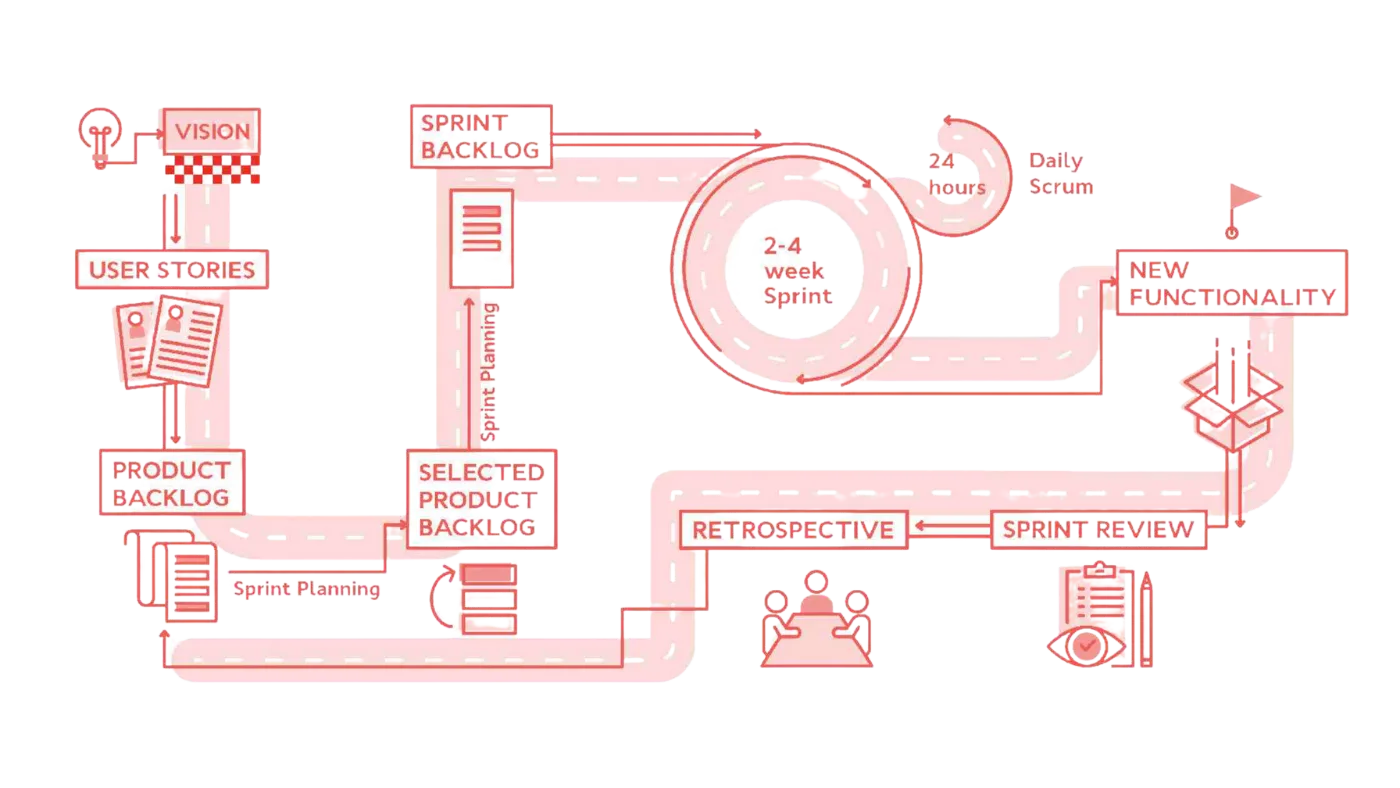
Agile Teams. Smart Delivery. Real Results.
Built on Seamless Teamwork and Autonomy
Each scrum team at Crystalloids is cross-functional so that all the competencies that are needed to accomplish the project are present. Our teams are self-organizing, meaning they choose how best to complete the project, rather than being directed by others outside the organization.
Understanding Scrum Roles
The Key Scrum Events
We follow a rhythm of short, focused events to maintain momentum and ensure alignment:
Scrum Artifacts
Scrum relies on clear, shared artifacts to track progress and prioritise work:
Guiding Success with User Story Mapping
At Crystalloids, we use the Scrum methodology, which we believe is the best way to deliver working software to our stakeholders. The knowledge and expertise within Crystalloids and the transparency and control resulting from the SCRUM Agile principles contribute massively to our customers' data strategies.
To avoid losing the overview of the bigger, long-term projects involving hundreds of user stories, we added a new element to the Scrum process: the user story map.
What is a user story map?
The user story map gives insight into the journey that users (or customers) take when they make use of the end product, including the activities and tasks they undertake in this process. The creation of the map is the first step when starting a project and it guides the agile team in the production of their product backlog.
The idea behind the story map is that you create it as a team, not just the product owner in charge. As a result, the whole team will be on the same page from the beginning of development until the ongoing delivery of new releases.
How the Map is Structured
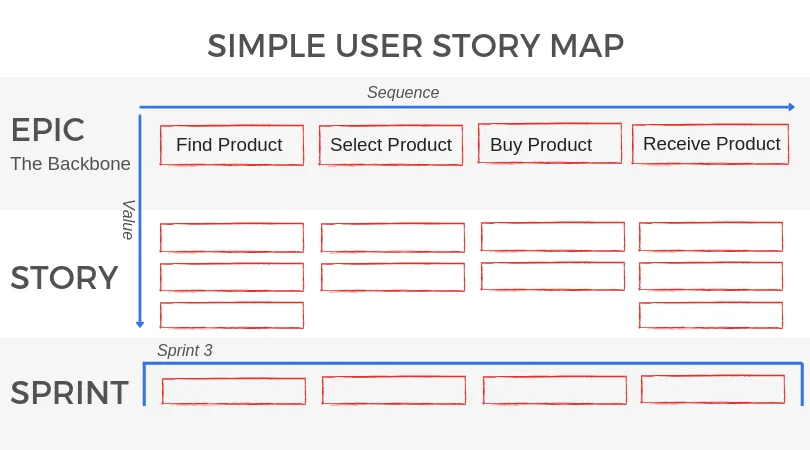
The map arranges user activities along the horizontal axis in the right sequence of time. Down the vertical axis, it represents the order of the value of the stories.
At the top of the map you find the backbone of the user story map; the activities a user will accomplish while using the product. The different user activities are the epics of the map.
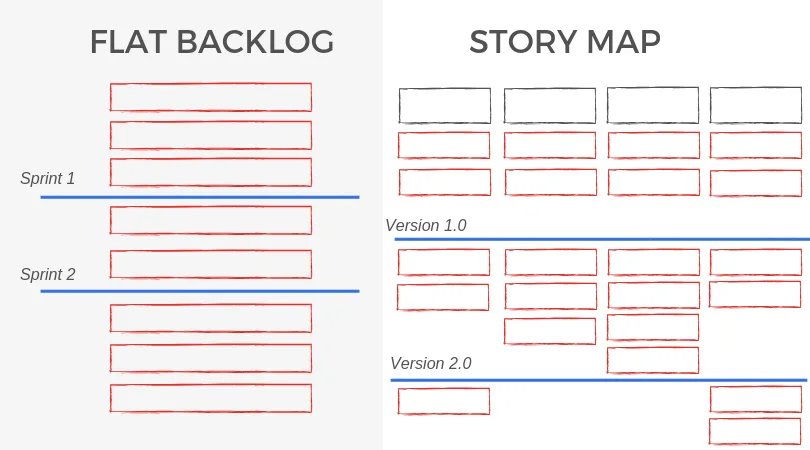
Flat Backlog vs Story Map
Unlike traditional backlog, the user story map has a vertical and a horizontal axis that displays the course of time. A user story map gives the entire context of a system in view, which helps with prioritisation. While the flat backlog only displays the features, the story map explains the customer’s journey or what needs to be achieved. In reality, most scrum team members use the story map and the backlog together.
A user story map is a collaborative practice that guides an agile team in creating its product backlog. The story map captures a customer's journey with the product, including activities and tasks they undertake. Creating the story map as a team ensures that team members are on the same page from the start of development to the ongoing delivery of new releases.

5 useful tips for creating your user stories

User story mapping — The Secret to Keeping Big Projects on Track